
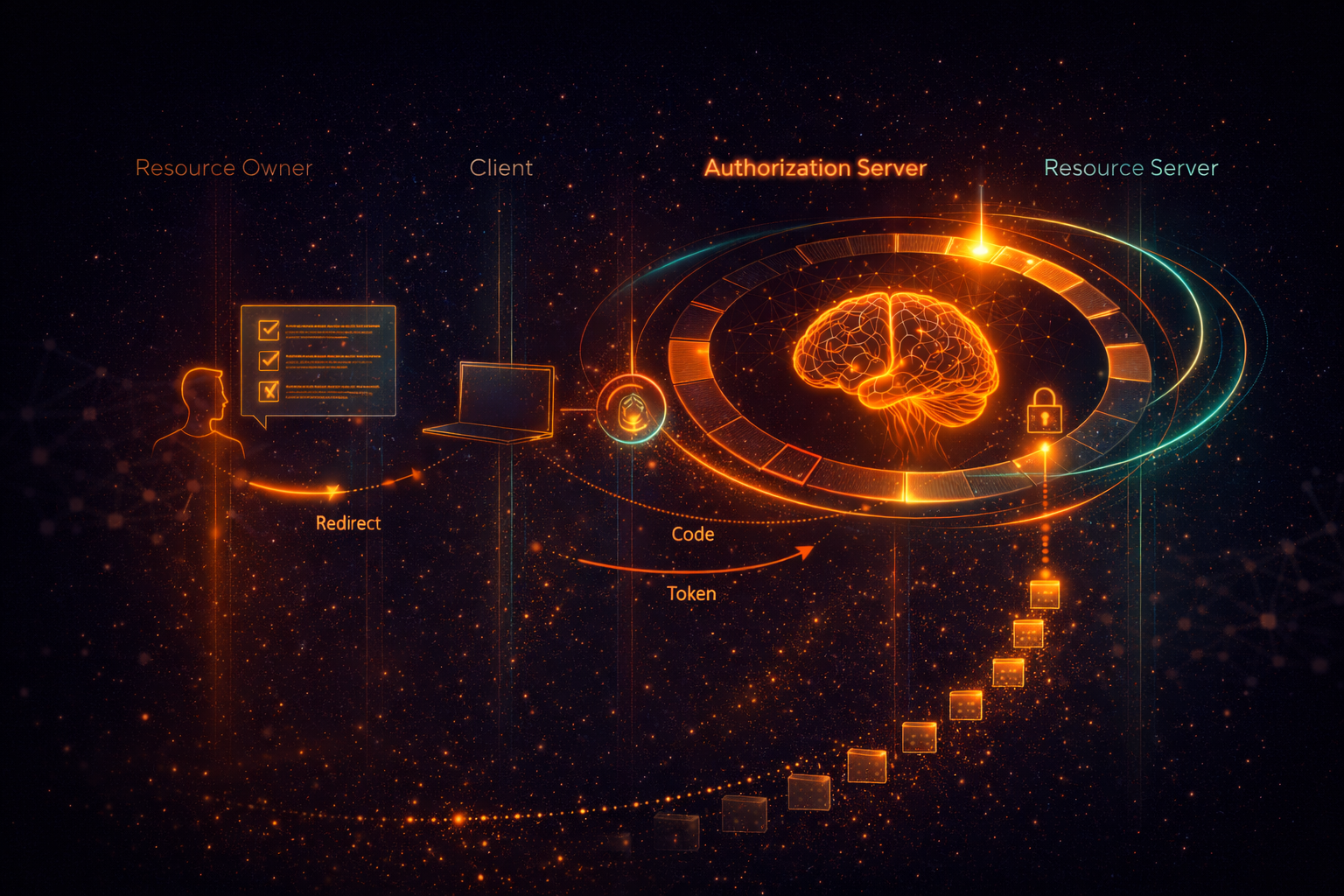
OAuth3: A Permission Slip for AI Agents
OAuth3 is a proposed authorization standard for AI agents. It is designed to answer a question missing from most AI toolchains: who approved the action, what was the limit, and how can it be revoked?
The public problem
Most current AI products are strong at generating an answer and weak at documenting authority. If an agent drafts an email, edits a CRM record, or posts publicly, users need more than a log line. They need a permission model that says what the agent could do, when it expires, and how to stop it.
OAuth3 is built around that operational gap. It treats agent action as a governed delegation problem, not just an API access problem.
What changes versus OAuth 2.0
OAuth 2.0 is excellent for identity and data access. OAuth3 extends that idea to real-world action. The focus is not only who the agent is, but what action scope it is allowed to perform, on which platform, for how long, and with what evidence requirements.
The public-safe takeaway is simple: a good agent needs a permission slip, an expiration time, a stop button, and a receipt.
- Scoped permissions instead of broad access
- Time limits and revocation built in
- Step-up approval for risky actions
- Evidence required for every delegated run
Why this matters now
The industry is moving from AI that suggests to AI that acts. That shift increases convenience, but it also raises the stakes. The right way to respond is not to hope the agent behaves. The right response is to make authority explicit and auditable.
That is why Solace treats OAuth3 as a governance layer for trustworthy browser and workflow automation.